
REST API Authentication Methods Clearly Explained
8 API authentication methods every developer should know.


Beyond RAG: Build AI That Actually Remembers
Presented by Oracle
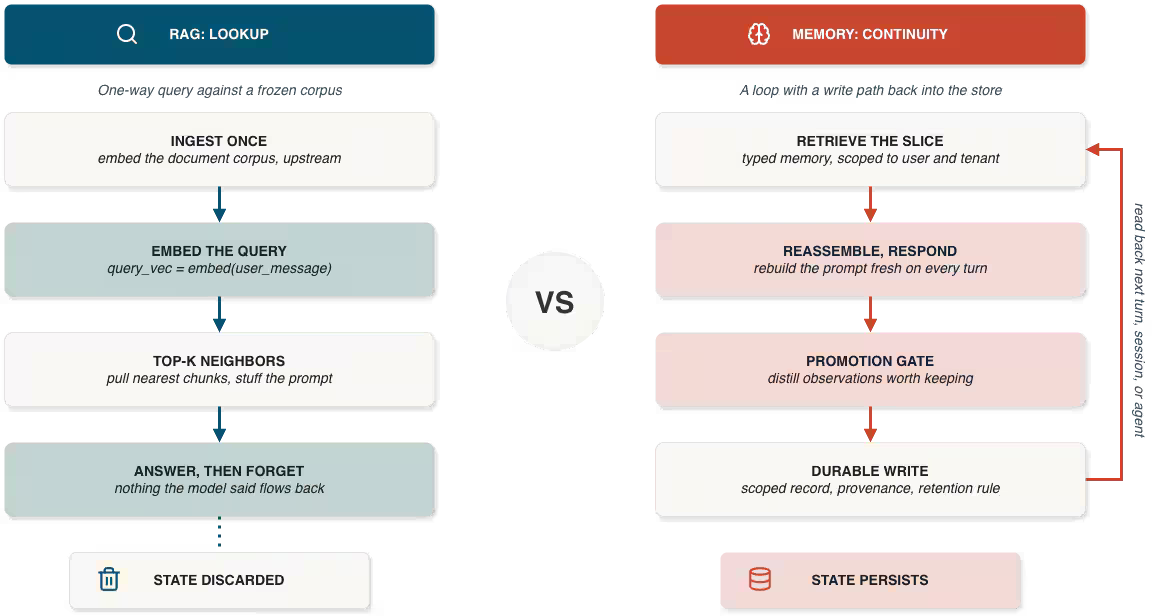
RAG helps AI retrieve information, but it doesn’t create long-term memory. Learn how to design stateful AI systems using typed memory, memory managers, scoped retrieval, and durable context that persists across conversations.
REST API Authentication Methods Clearly Explained
API authentication looks simple from the outside: send a credential, validate it, allow the request.
But that small layer controls who can access the system, what they are allowed to do, and how much damage a leaked credential can cause. API keys, bearer tokens, and mutual TLS all solve the same problem, but they do it with very different trust models.
The real challenge is not just security. It is operational control.
Your team still has to rotate credentials, revoke access, trace abuse, audit requests, and recover from leaks without breaking production traffic. The authentication method you choose shapes how difficult those tasks become as the system grows.
How APIs prove identity
Authentication proves identity. Authorization decides what that identity is allowed to access.
A request usually proves identity in one of three ways:
Shared secret → Both the client and server know the same secret, like an API key or HMAC secret.
Issued token → A trusted system issues a temporary credential, like a bearer token or JWT.
Cryptographic certificate → The client proves it owns a private key, like in Mutual TLS (mTLS).
You can think of it like entering a secure building.
An API key works like a badge number. A bearer token works like a temporary access pass. Mutual TLS is closer to a guard verifying the badge, the holder, and the issuing authority before unlocking the door.
Simple methods: API keys and basic authentication
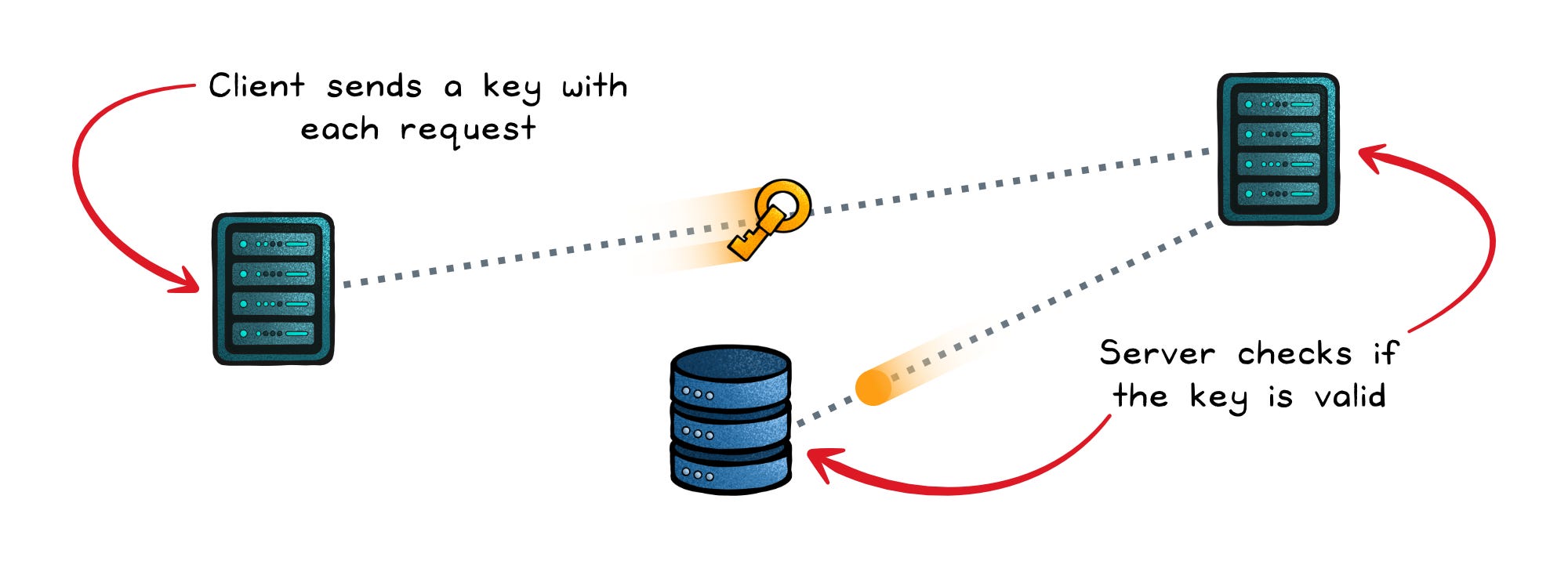
API keys are the simplest form of API authentication.
The client sends a key, usually in a header like x-api-key, and the server checks whether it is valid.
They are commonly used for:
Identifying applications → Lets the server know which app or customer is making requests.
Usage tracking → Helps measure traffic, quotas, and billing.
Rate limiting → Applies different limits to different clients.
Fast onboarding → Easy to issue, test, and integrate.
But API keys have a major limitation: they only prove possession.
If a key leaks through logs, mobile apps, screenshots, or public repositories, anyone holding that key can usually act as that application until the key is revoked or rotated.
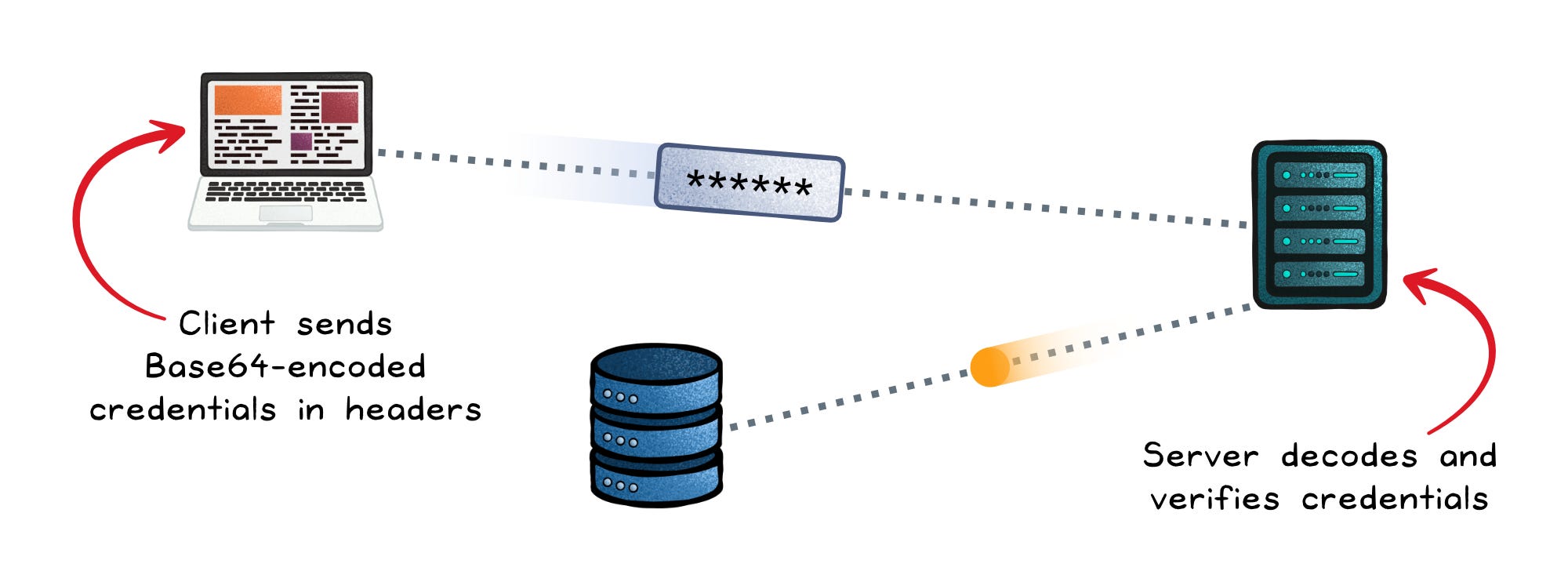
Basic authentication works similarly.
The client sends a username and password in the Authorization header after Base64-encoding them. Base64 is not encryption. It is only a reversible text format, which means the real protection comes from HTTPS.
These methods work best when:
The client is trusted → Internal tools and controlled integrations.
The risk is low → Limited permissions and low-impact operations.
Rotation is manageable → Credentials can be replaced quickly if exposed.
They become risky when you need:
User-level permissions → Different users need different access.
Delegated access → One system acts on behalf of another user.
Fine-grained authorization → Different operations need different scopes or controls.
Bearer tokens and JWTs
Once long-lived passwords and API keys stop scaling well, systems usually move to tokens.
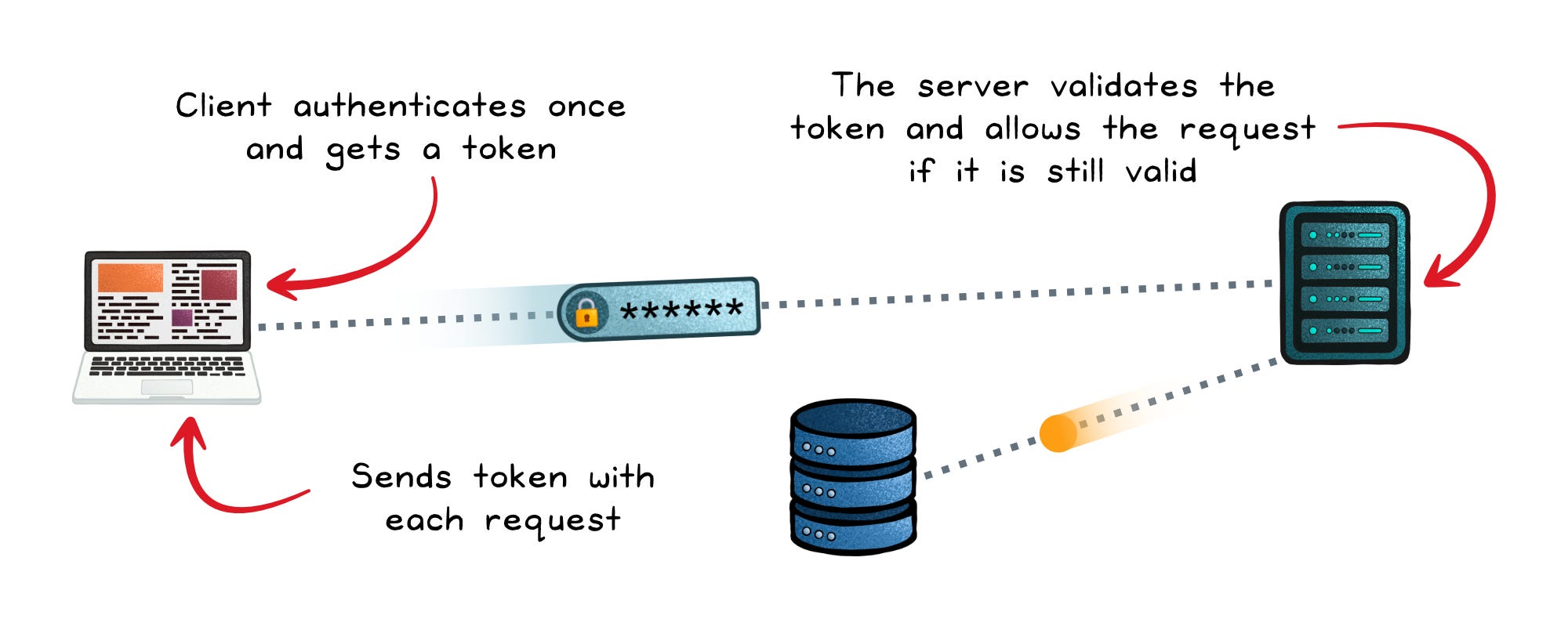
Bearer tokens follow a simple rule: whoever holds the token can use it.
The client sends: Authorization: Bearer <token>. The server validates the token and allows the request if it is still valid.
That model is useful because tokens can be:
Short-lived → Limits the damage if a token leaks.
Scoped → Restricts what the client is allowed to access.
Dynamically issued → Created after login or machine-to-machine authentication.
But the downside is in the name: bearer.
If an attacker steals the token, they can usually act as that user or service until the token expires or is revoked.
JWTs (JSON Web Tokens) are one of the most common bearer token formats. They contain claims: small pieces of identity and permission data like:
User ID → Who the token represents.
Issuer → Which system created the token.
Audience → Which service should accept it.
Scopes → What the caller is allowed to do.
Expiration time → When the token becomes invalid.
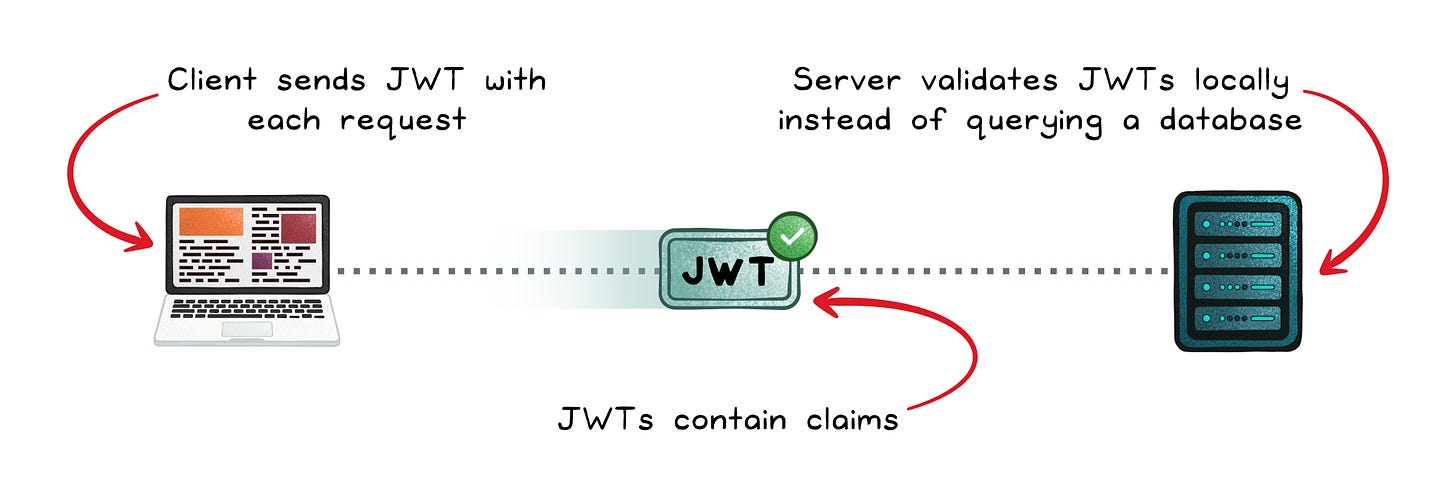
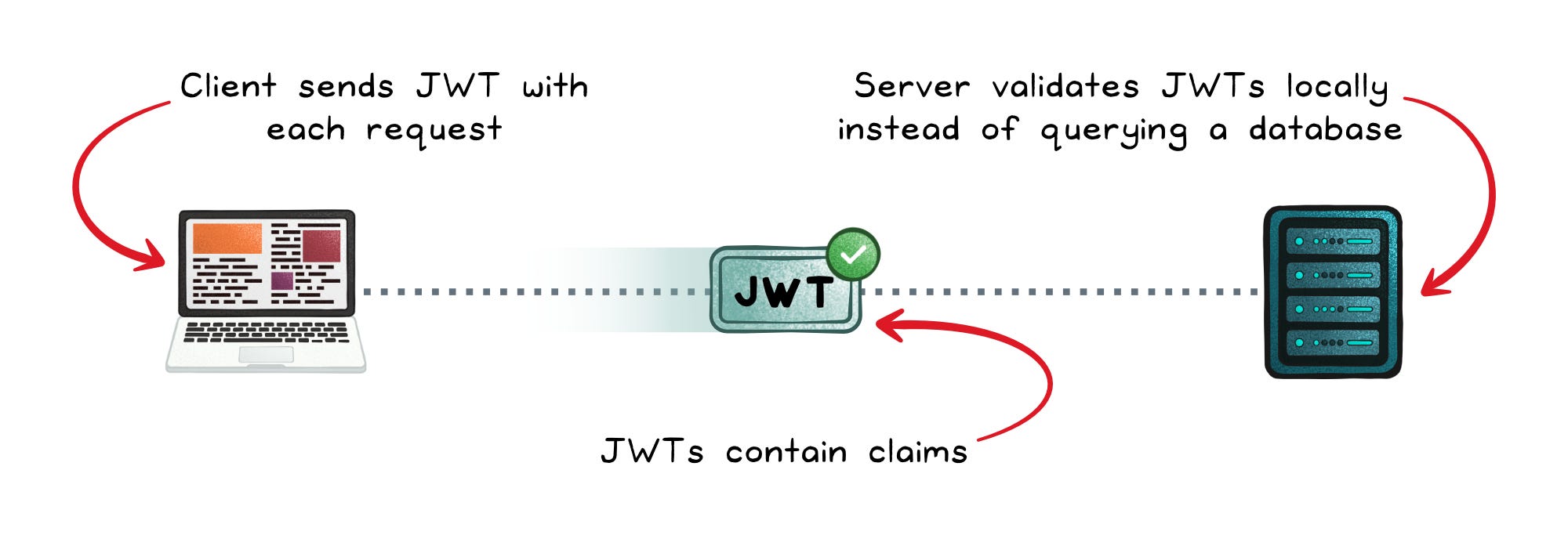
The token is digitally signed so APIs can verify it came from a trusted issuer.
The main advantage is speed. Services can validate JWTs locally without querying a central authentication database on every request, which works well in distributed systems.
The compromise is freshness. If access changes after the token is issued, the JWT may still remain valid until it expires unless the system also supports revocation checks.
Good JWT hygiene usually means:
Use short expiration times → Reduces the impact of leaked tokens.
Validate issuer and audience → Prevents tokens from being accepted by the wrong services.
Avoid sensitive payload data → Signed does not mean encrypted.
Delegated access: OAuth 2.0 and OpenID Connect
Once applications need to act on behalf of users without handling their passwords directly, simple API keys and bearer tokens are no longer enough.
That is where OAuth 2.0 comes in.
OAuth 2.0 is an authorization framework. It allows one application to access another service on a user’s behalf without ever seeing the user’s password.
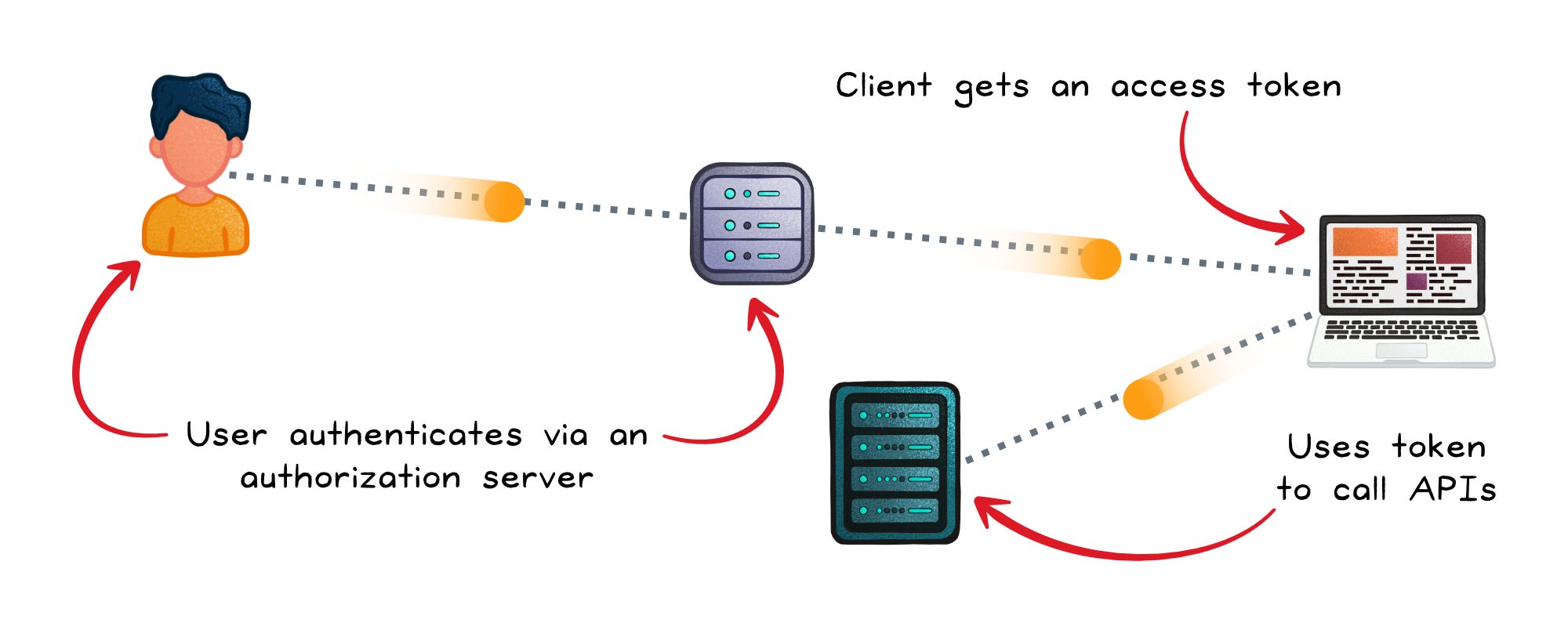
A common example looks like this:
A reporting tool requests access → The app asks to read your analytics data.
The user approves the request → Consent is handled by an authorization server.
A token is issued → The reporting tool receives an access token.
The API validates the token → The API checks the token and its scopes before allowing access.
Scopes define what the token is allowed to do, like reading analytics data but not deleting it.
OpenID Connect (OIDC) builds identity on top of OAuth 2.0.
OAuth answers: “Can this client access this resource?”. OIDC answers: “Who is the user?”
It introduces ID tokens, which contain identity claims used for login and single sign-on (SSO).
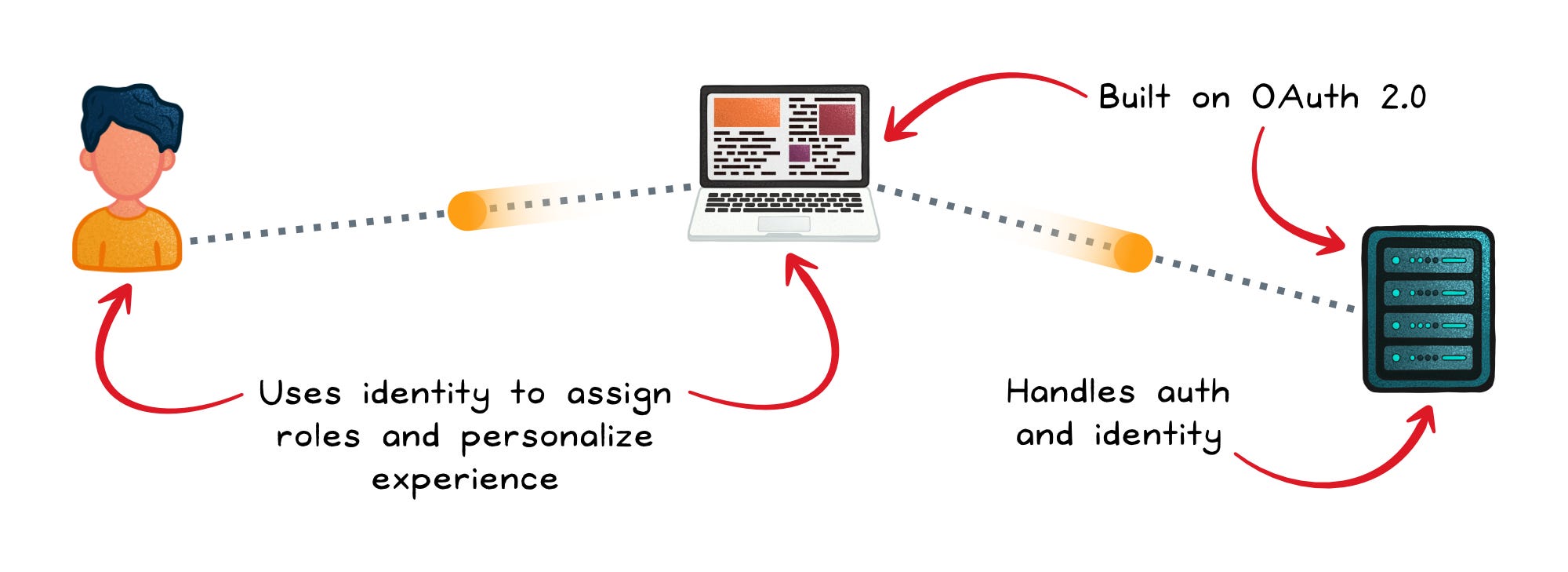
A common mistake is mixing the two token types together:
ID token → Tells the client who logged in.
Access token → Tells the API what the caller is allowed to access.
Use OIDC for authentication and user identity. Use OAuth 2.0 for API authorization.
Proof-of-possession: HMAC and mutual TLS
Sometimes validating a token is not enough.
If a leaked credential would be high impact, the system needs stronger proof that the caller is legitimate, not just holding a copied string.
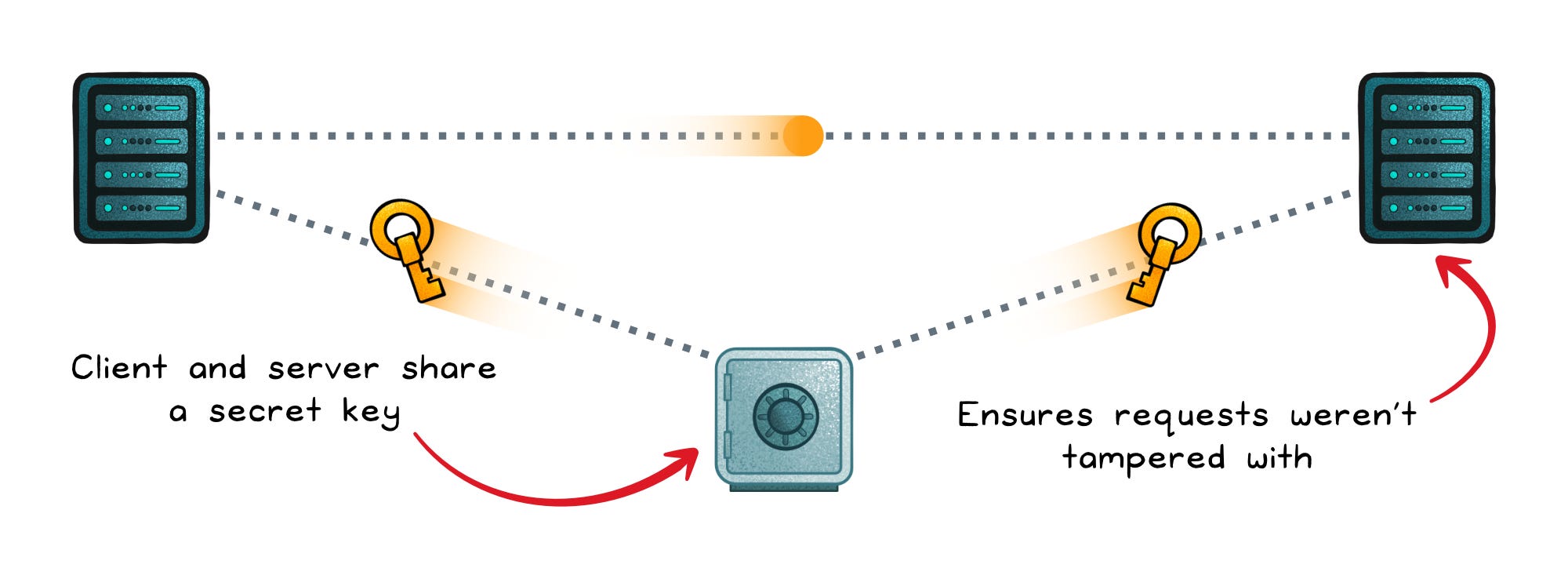
HMAC (Hash-based Message Authentication Code) is one way to do that.
The client generates a signature using:
The request details → Such as the path, body, or timestamp.
A shared secret → Known only by the client and server.
The server recreates the signature and compares the result. That gives stronger guarantees because it can prove the request was not modified in transit.
HMAC is common for:
Webhooks → Verifies callbacks really came from the provider.
Payment APIs → Protects high-risk financial requests.
Server-to-server communication → Adds integrity checks between trusted systems.
But signed requests can still be replayed. That is why HMAC systems usually include timestamps and nonces to reject duplicate requests.
Mutual TLS (mTLS) goes even further.
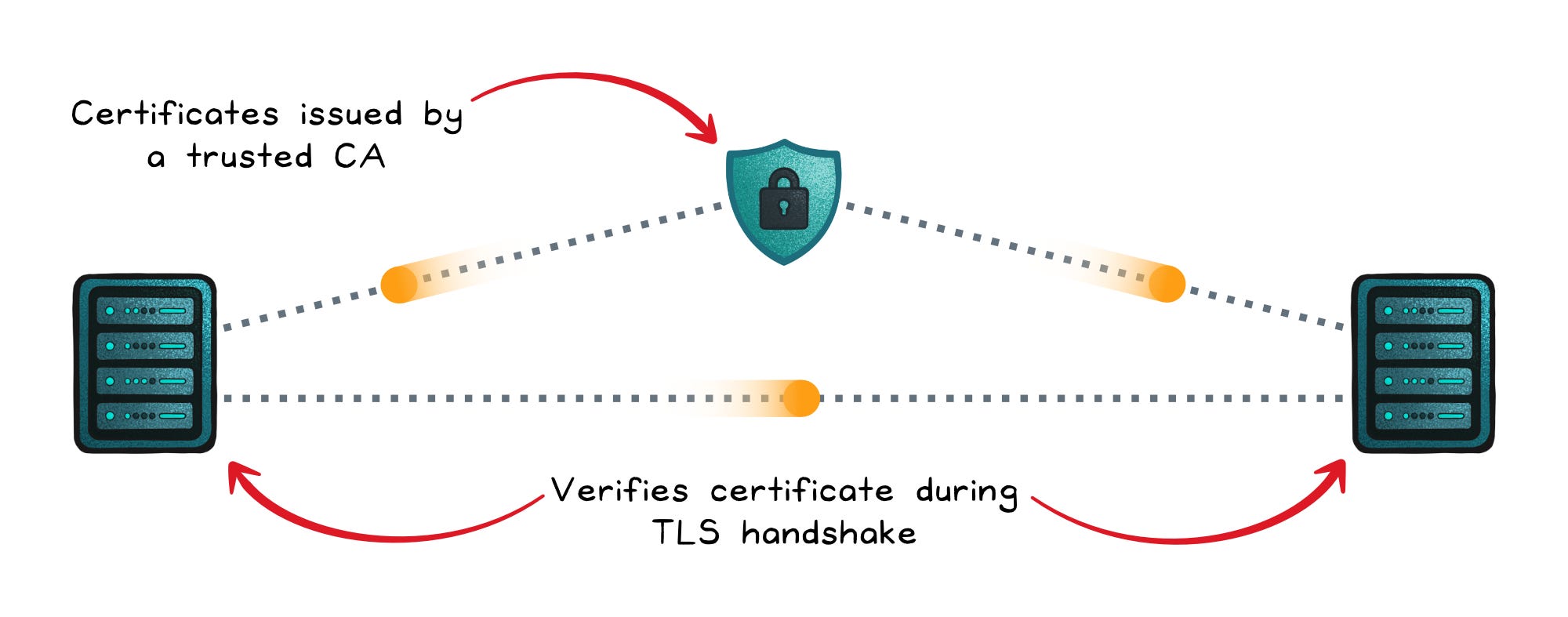
In normal TLS, the client verifies the server certificate. With mTLS, the server also verifies the client certificate before the request reaches the application.
Both sides prove their identity during the TLS handshake itself.
mTLS works well for:
Internal service communication → Strong identity inside distributed systems.
Financial and regulated APIs → High-trust environments.
Zero-trust networks → Every connection must prove identity.
The operational complexity increases because your team now has to issue certificates, rotate them, manage expiry, and debug TLS handshake failures when something breaks.
How to choose the right authentication method
Start with one question: What happens if this credential leaks?
That answer usually determines how strong the authentication layer needs to be.
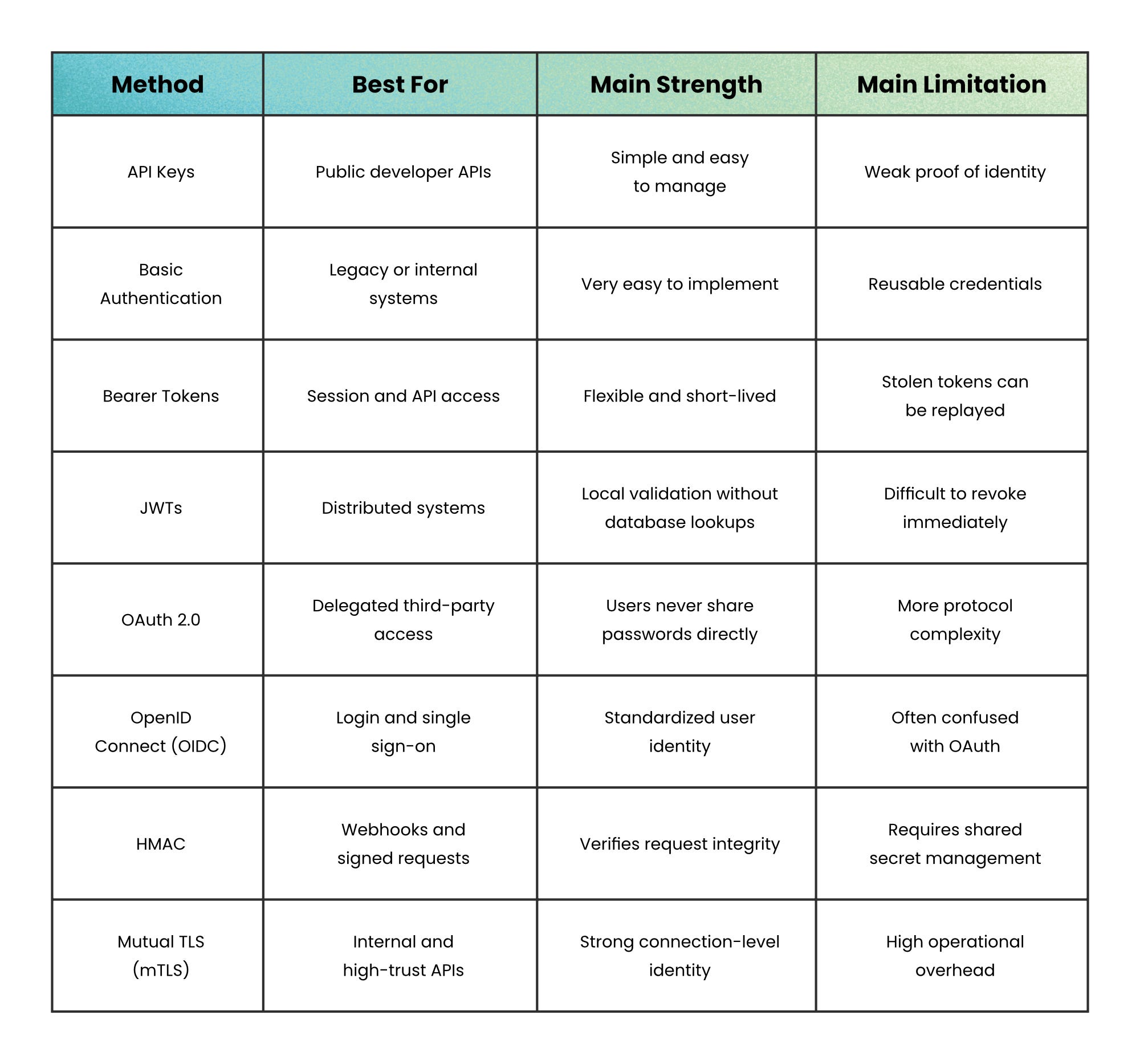
Different methods solve different trust problems:
Some patterns are worth avoiding:
API keys for sensitive operations → They identify the caller but usually provide weak authorization controls.
Basic authentication for public APIs → It exposes reusable primary credentials if compromised.
JWTs when immediate revocation matters → A signed token may remain valid until expiration unless revocation checks exist.
mTLS for small public APIs → Certificate management often creates more operational cost than security value at smaller scales.
The hardest part is not choosing the strongest method.
It is choosing the level of security and operational complexity your team can reliably manage over time.
Wrapping up
Authentication is a design choice, not a checkbox.
API keys and Basic authentication optimize for simplicity. Bearer tokens and JWTs make distributed access easier. OAuth 2.0 handles delegated authorization. OpenID Connect adds identity. HMAC protects request integrity. Mutual TLS verifies both sides before the connection is trusted.
Strong systems rarely rely on a single layer of authentication.
They layer methods where the risk justifies it, keep credentials short-lived, rotate secrets regularly, log access carefully, and make failures visible before they become incidents.
Good authentication does more than reject bad requests.
It makes every accepted request explainable: who made it, what it was allowed to access, and how long that trust should last.
Related LUC reading
👋 If you found this useful → Like + Restack to help others learn system design.